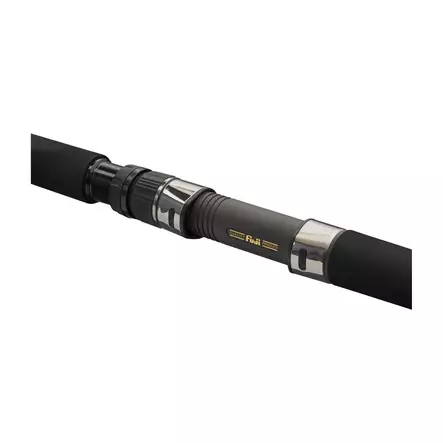
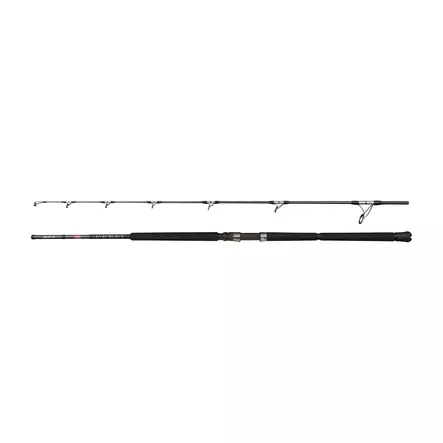
In sea fishing, a rod is chosen to suit the fishing style, the depth and the target species. In this category you will find inshore and coastal rods, surfcasting rods, boat and bottom fishing rods, jigging rods, popping and stickbait rods, trolling and big game rods and travel saltwater rods. The range covers light coastal fishing just as well as heavy offshore fishing.


From the shore, rod length and casting weight are what matter most. Inshore and coastal rods are light and sensitive, and they suit fishing with lures and small jigs from rocky shores, among islands and in fjords. Shore jigging rods are more powerful and cast heavier jigs a long way. Surfcasting rods are long, so a heavy lead and bait can be cast well beyond the surf line.
From a boat, the rod can be shorter. Boat and pirk rods are used to drop a pirk or bottom rig to the seabed for cod and pollock, while halibut and heavy boat rods are built to fight big bottom species. Among jigging rods, slow pitch rods work the jig with their flexible action, while speed and vertical jigging rods handle a fast, powerful rhythm.
Popping and stickbait rods are used to cast surface lures to predatory fish such as GT and tuna. These rods need casting power and a strong backbone, because a heavy lure has to go a long way and a big fish has to be stopped before it reaches the reef. Trolling and stand-up rods and big game rods handle long fights from the boat, whether the rod sits in a holder, in a fighting belt or is used with a harness.
Travel saltwater rods break down into several sections, so they fit in airline luggage and in tight storage spaces on a boat. Always choose a rod to match the reel, the line and the weight of your lures, because a balanced combination casts better and tires your arm less. Rinse the guides and reel seat in fresh water after every trip so salt does not corrode them.